
Kitchen grease removal is one of the most common and irksome activities in the course of preparing for the final inspection. Whether you are vacating an apartment where you have been living, closing down your business, or selling your home, you will face the challenge of kitchen grease, which will inevitably result in negative consequences of the inspection. Inspection specialists will carefully analyze the level of sanitation, and the presence of grease will speak volumes about unsanitary conditions and the poor maintenance of property. Not only is grease unpleasantly dirty, but it also hardens and covers the walls of the kitchen. If it is not removed thoroughly enough, you can find yourself receiving deductions from your security deposit, failing to meet safety standards in your business environment, or simply failing inspection altogether. But if you follow the right procedure, you will definitely remove the toughest grease.
Important Stats You Need To Know
According to Star Food Equipment,The issue of grease in the kitchen environment carries a lot of danger for health and inspection procedures. Studies have shown that more than 60% of all kitchen inspections end up failing because of grease build-up in the ventilation systems of the kitchen environment.
Data from Southern Kitchen Service suggests that the grease build-up is also a major cause of fire outbreak in kitchens since grease is highly flammable and prone to fire outbreaks.
Reports by Mangrove Services say that the grease build-up reduces the effectiveness of the ventilation system. Efficiency is reduced up to 60%, meaning that there will be a higher level of strain on the system.svdfvsdvsdcsdcsdcsd
Why Is Kitchen Grease a Serious Inspection Problem?

Health and Safety Concerns
Apart from being visually unpleasant, grease can pose a serious hygiene issue. The greasy film tends to attract dust, microbes, and pests like cockroaches and rats. This is particularly dangerous for restaurant kitchens since the sanitary code does not permit any contaminants in the preparation area.
Moreover, one should consider the fire safety aspect since grease is highly flammable. Therefore, an excessive amount of oil buildup in kitchen equipment like stoves, ovens, and exhaust hoods can pose a risk of fires.
Aesthetic and Hygiene Standards
In assessing the cleanliness level of a kitchen, a visual and tactile inspection is carried out. Grease makes the surface look dirty, dark, and sticky. Inspectors rub their hands over the surface to see whether grease remains. However, grease might be accumulated beneath the bulky kitchen equipment or in less accessible places.
Financial and Legal Consequences
If you fail to remove the grease properly, you are sure to forfeit your security deposit when renting out apartments. In case you are working in the food industry, then you are likely to receive hefty fines or have your business shut down until you resolve the problem. When selling homes, it will reduce their prices.
Common Areas Where Stubborn Kitchen Grease Builds Up
Cooking Appliances
They are directly under the impact of heating and splashed oil, thus becoming the leading areas of grease deposits.
Ventilation and Exhaust Appliances
The filters of range hoods and exhaust ducts collect airborne grease droplets and require careful cleaning since they are heavily covered over time.
Kitchen Counters and Cupboards
Kitchen cupboards, countertops, and back splash tiles get greasy from the vicinity of cooking appliances. Grease is easily accumulated by handles and edges.
Hidden Areas for Grease Deposition
Among those places which are not frequently cleaned:
- The rear part of the stove and refrigerator
- Corners of the walls in the kitchen close to cooking appliances
- Edges of the floor surface
Kitchen inspectors must thoroughly check such spots.
Remember there are many mistakes that tenant makes, checked out the mistake that Tenants Make While Cleaning Kitchen Appliances Before Moving Out.
Essential Tools and Cleaning Supplies You Will Need
To be able to remove grease effectively, the following equipment must be used:
- Degreasers, thick or liquid ones.
- Baking soda and vinegar (another way).
- Hot water with dishwashing soap.
- Microfiber cloths.
- Scouring pads that do not scratch.
- Grease scrapers.
- Gloves.
- Steam cleaner (as optional equipment).
The use of the right equipment will result in better results.
Step-by-Step Method to Remove Stubborn Kitchen Grease
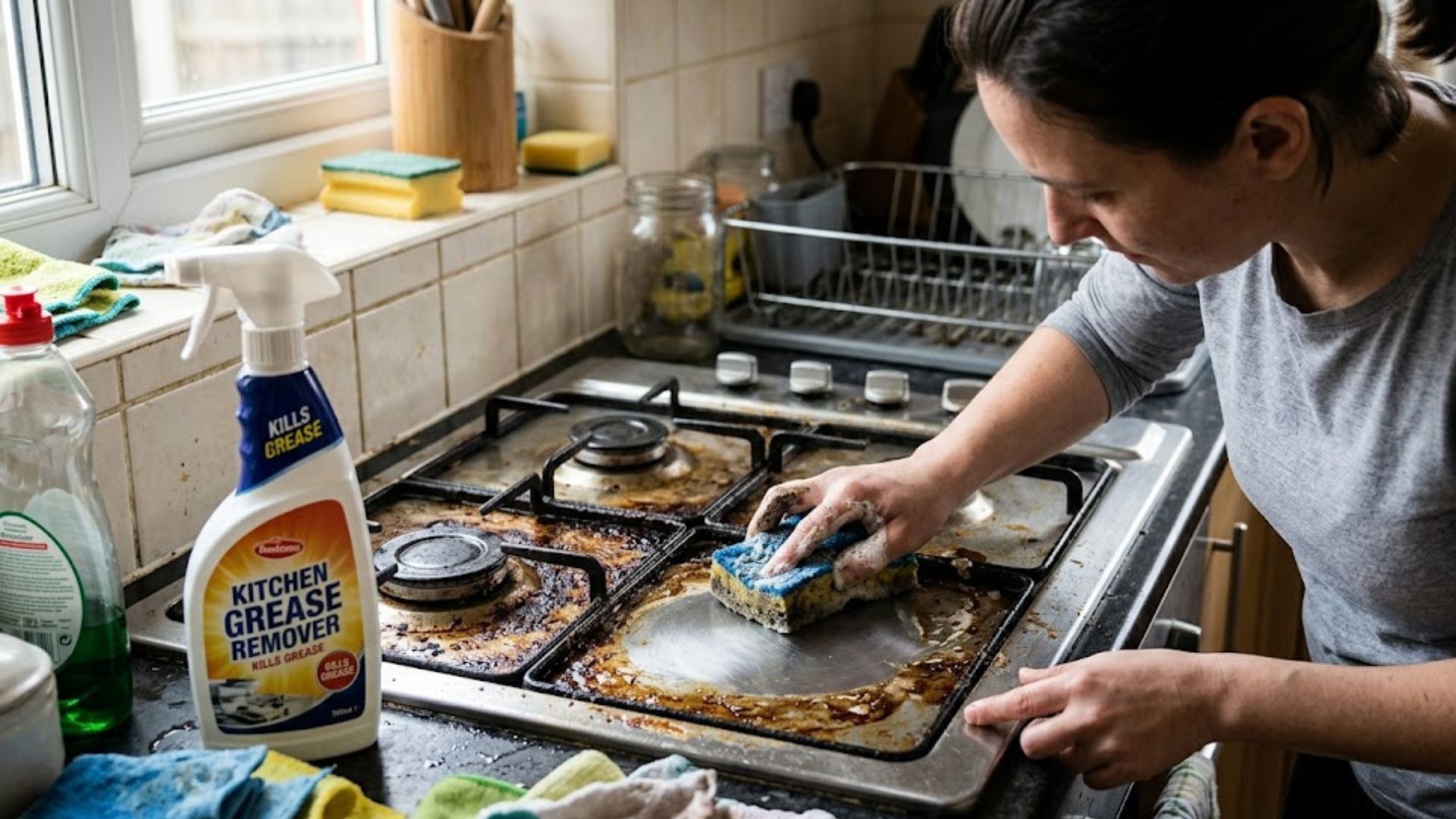
Preparation Step
Start by wiping counters and all other components within the kitchen. Turn off all electric gadgets to be safe. Disassemble all the parts that are removable such as grates on the stove, oven racks, filters, and let them soak in warm detergent water.
Degreasing Step
Use good quality degreaser on the greasy surfaces. Let it sit there for 10-15 minutes. This step is important since degreaser acts on oil molecules breaking them up.
Cleaning Step
Use a microfiber cloth or sponge for cleaning. Do this in circular motion for best results. For removing tough stains, make a paste using baking soda and water.
Cleaning Appliance Correctly
- Oven – Apply baking soda paste on extremely greasy areas and leave it for an overnight period.
- Stove – Remove the burners and clean them individually.
- Microwave – Put vinegar-water mixture in it and boil to aid in cleaning.
Cleaning of the Exhausting System
Dip the filters in a dish of hot water with vinegar and dish soap. Scrub the filters thoroughly to remove grease accumulation. After drying, put them back in place.
Finishing Touches
Use a wet wipe to clean everything, followed by immediate drying. Shine the surfaces made from stainless steel.
Also Read:- Top 10 Benefits of Hiring Bond Cleaning Services
DIY Natural Remedies for Grease Removal
Baking Soda and Vinegar
This process results in the formation of foam that will help in lifting the grease from the surfaces. It is appropriate to use for cleaning anywhere in the kitchen.
Lemon Juice
Its main function is to get rid of the grease without causing any harmful effects. It is also good because of its smell, hence suitable for any surface with grease on it.
Dish Soap and Warm Water
This works very well in getting rid of the grease. This procedure can be applied every day.
Salt Scrub
Apply salt in order to scrub away the grease.
Professional Cleaning vs DIY Cleaning
The DIY method is not that bad. It can effectively remove moderate levels of grease build-up. It can be employed in residential kitchen areas or prior to an inspection.
Whereas, professionals like Best Bond Cleaning help is needed when:
- There is heavy and frequent grease build-up.
- The commercial kitchen is required to adhere to certain guidelines.
- Inspection cannot be done within the allotted timeframe.
By any chance if you are confused that which professional service you hire then we recommended you to read this; How to Choose the Best Bond Cleaners in Your Area
Common Mistakes to Avoid
Reasons as to why most individuals fail in inspections are numerous; some of them include:
- Immediately cleaning up the grease before the cleaner takes effect
- Not paying attention to hard-to-clean areas like the vents and behind the fridge
- Employing harsh cleaners which end up destroying surfaces
- Inappropriate mixing of cleaners like bleach and vinegar
- Not drying the cleaned surfaces
- The mentioned factors are easy to evade in order to pass the inspection.
They possess advanced equipment that provides deep and quick cleaning results.
Preventing Grease Build-Up in the Future
| Area | Action | Treatment Effect |
| General Cleaning | Surface cleaning everyday, stove cleaning weekly | Prevents accumulation of greasy deposits |
| Ventilation | Fan exhaust usage, filter cleaning monthly | Reduces grease in the atmosphere |
| Cooking Methods | Use of cover while cooking, avoiding cooking in excess heat | Prevents oil splashes |
| Deep Cleaning | Kitchen cleaning periodically every 1-2 months | Ensures that kitchen passes inspection |
Conclusion
To clean kitchen grease that cannot be easily cleaned before an inspection, one needs to employ much more than just basic cleaning methods. It involves planning, proper materials, and correct methods. Grease deposits are not only about the looks of a kitchen but also about hygiene and cost issues.
By combining all the above techniques, you can be sure that your kitchen will always be ready for inspections at any time.
However, you can also count on professional cleaning services like Contacting Best Bond Cleaning to provide you a stress-free experience.
FAQs about How to Deal with Stubborn Kitchen Grease Before Final Inspection
What are some reasons why kitchen grease creates problems during final inspections?
Kitchen grease poses a risk of hygiene issues, pest infestations, and displays carelessness that causes an inspection failure or loss of deposit money.
How can I quickly get rid of stubborn kitchen grease stains?
Using a strong degreaser and allowing it to dwell and scrub with a microfiber cloth and then rinse with warm soapy water will help.
Can I use natural cleaners to get rid of kitchen grease?
Yes, you can use substances like baking soda, vinegar, and lemons as natural cleaners to remove heavy grease if you allow them time to dwell.
How often should I get rid of kitchen grease?
You have to wipe kitchen grease away every day, clean it weekly and then deeply clean kitchen grease monthly or every two months.
Will the inspector also pay attention to invisible kitchen grease stains?
Yes, an inspector may also be aware of kitchen grease stains in inaccessible places such as behind the refrigerator and vent grills.